Eating Disorders
No judgement. No pressure. Just compassionate support.When eating feels complicated, you don’t have to navigate it alone.
Eating disorders can affect far more than what you eat. They can influence how you feel about food, your body, eating in social situations, and even how you interpret everyday physical sensations.
At The Gut Friendly Dietitian, we understand how complex and challenging it can be when managing an eating disorder or disordered eating behaviours. That is why we are passionate about providing inclusive, trauma informed and evidence-based nutrition support for people diagnosed with an eating disorder—or experiencing disordered eating patterns, food anxiety, or struggling with their relationship with food and body image. We understand that recovery isn’t about following a perfect meal plan or simply changing what you eat…it’s about building a safer, more flexible and sustainable relationship with food.
The overlap with gut symptoms
Gut symptoms and eating disorders can sometimes become closely intertwined.
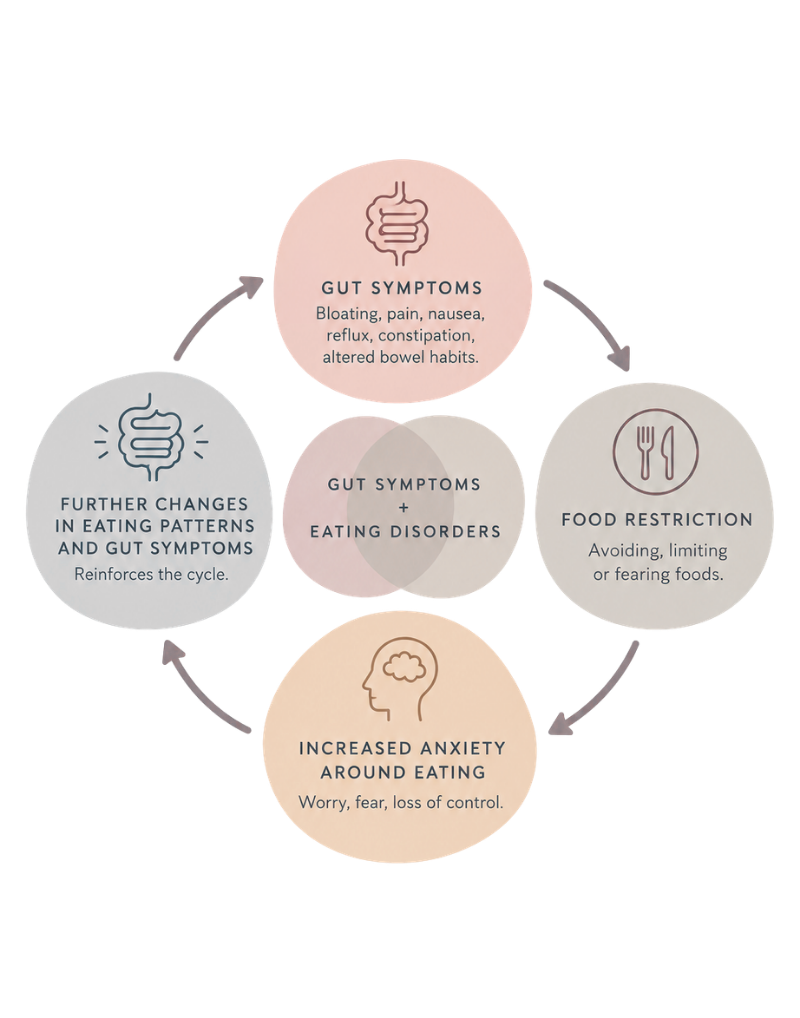
Bloating, abdominal pain, nausea, reflux, constipation and altered bowel habits can make eating feel uncomfortable or unpredictable. And in turn, anxiety around symptoms can lead to avoiding foods, restricting intake or becoming increasingly fearful of eating. For some people, these patterns can become difficult to distinguish from genuine food intolerances or other gastrointestinal conditions.
This can create a cycle of symptoms → food restriction → increased anxiety around eating → further changes in eating patterns and gut symptoms.
We understand the importance of looking at the bigger picture rather than simply adding more foods to a list of things to avoid.
The gut-brain connection
The gut and brain communicate constantly, which means stress, anxiety, eating patterns and gastrointestinal symptoms can influence one another.
For people experiencing disorders of gut-brain interaction, such as IBS, this relationship can be particularly important. Nutrition support may involve understanding how symptoms are affecting your relationship with food, while also ensuring you’re getting adequate nutrition and working towards greater flexibility and confidence with eating.
Our approach focuses on the whole person—not just managing individual symptoms.
Supporting a range of eating disorders and food-related challenges
Our dietitians support young adults (16-24 years) and adults navigating:
- Anorexia Nervosa
- Bulimia Nervosa
- Binge Eating Disorder
- Avoidant/Restrictive Food Intake Disorder (ARFID)
- OSFED
- Pica
- Food anxiety and fear around eating
- Orthorexia
- A difficult or distressing relationship with food and body

We take a person-centred approach that recognises every individual’s experience is different. Support is tailored to where you are in your journey, your nutritional needs, your relationship with food, and any physical or digestive symptoms you’re experiencing.
Nutrition support that meets you’re at…
Depending on your individual needs, support may include:
-
Improving nutritional adequacy and regularity of eating
-
Working towards greater flexibility and variety with food
-
Reducing fear and anxiety around eating
-
Supporting the nutritional aspects of eating disorder recovery
-
Navigating gut symptoms without unnecessary restriction
-
Understanding the relationship between food, symptoms and anxiety
-
Supporting body trust and a more positive relationship with food and eating
-
Working with your GP, psychologist, psychiatrist or other healthcare professionals where appropriate
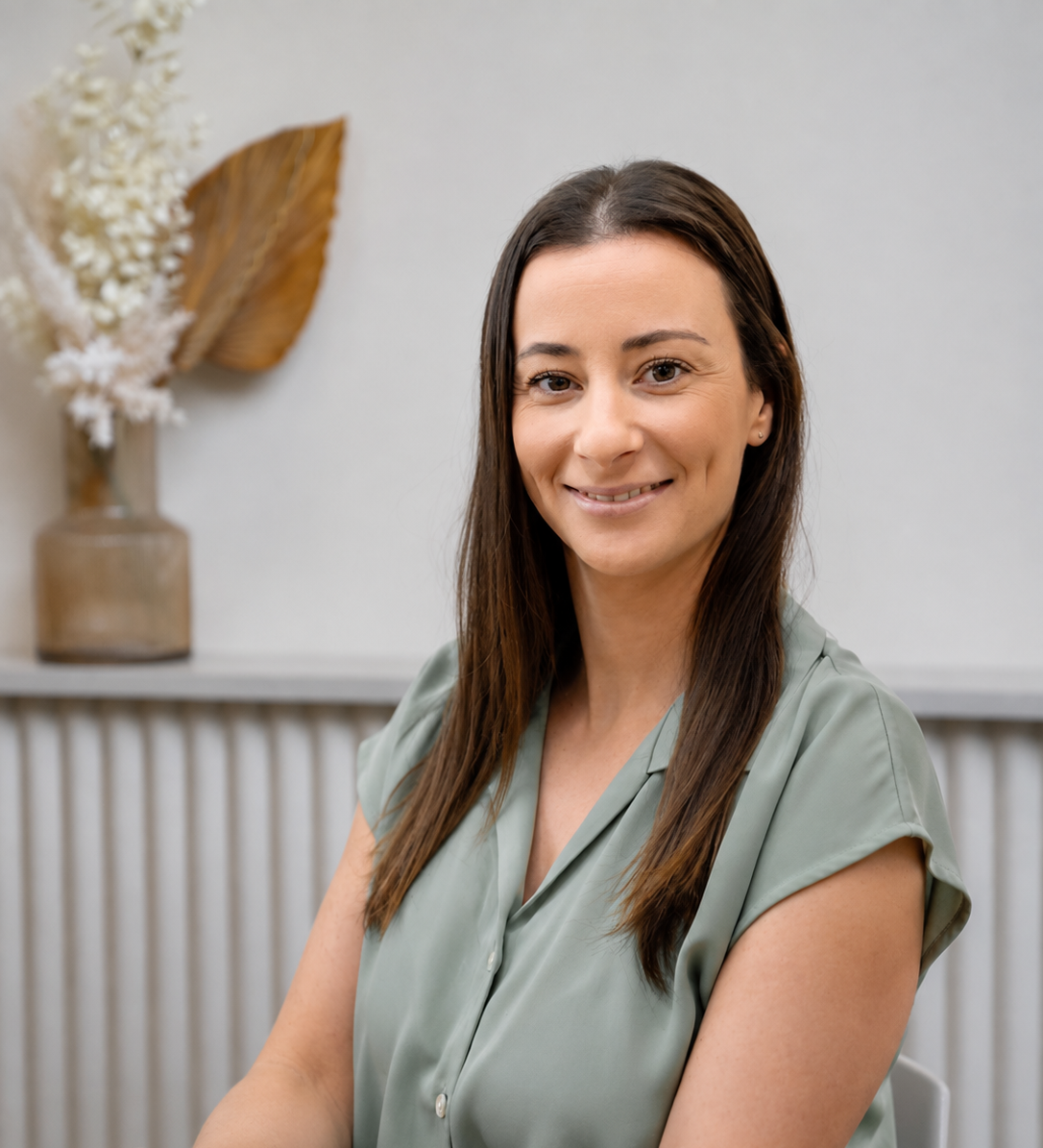
Meet Samantha.
As a Senior Dietitian and Credentialed Eating Disorder Dietitian with over 8 years of private practice experience, Samantha brings extensive clinical experience alongside a warm, compassionate approach to care. She understands the complexities of eating disorders and the often confusing overlap between food, gut symptoms, anxiety and the gut-brain connection.
Samantha works with people experiencing a range of eating disorders and food-related challenges, providing individualised, evidence-based nutrition support that prioritises safety, nourishment and recovery without judgement.
Appointments are available face-to-face at our Wollongong clinic or online via telehealth, making specialist eating disorder dietetic support accessible wherever you are in Australia.
If food has become a source of anxiety, confusion or distress, you don’t have to work through it alone. Samantha is here to help you take the next step towards a healthier, more trusting relationship with food.